
Absolutely! They definitely do by scrubbing your indoor air of hidden triggers like mold and smoke. High-quality HEPA filtration traps microscopic particles that irritate your airways. Adding a purifier to your home creates a cleaner environment, helping you reduce symptoms and breathe much smoother!
If you struggle with the sudden tightening of your chest or the persistent whistle of a wheeze, you know that your home isn’t always the “safe haven” it should be. You might wonder if the air you breathe while sleeping or relaxing is secretly triggering your symptoms. This leads to a vital question for your health: Do air purifiers help with asthma?
The short answer is yes, but there is more to the story than just plugging in a machine. To truly find relief, you need to understand how these devices interact with your specific triggers. In this guide, we will break down the science, the benefits, and the pitfalls so you can breathe easier.
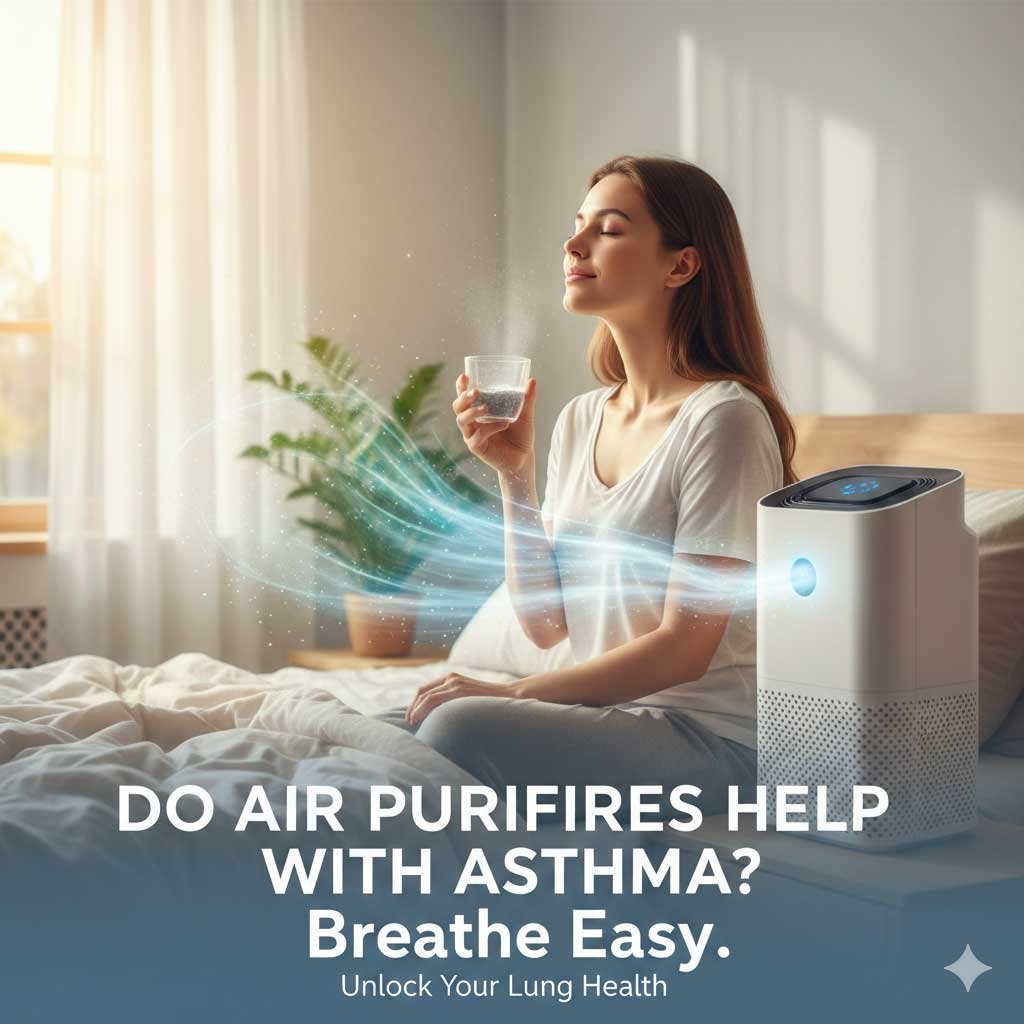
How Air Purifiers Fight Asthma Triggers
Asthma is often a reaction to “invaders” in the air. These tiny particles travel deep into your airways and cause inflammation. An air purifier acts like a security guard for your lungs. It pulls in the air, traps the bad stuff, and pushes out clean air.
The Role of HEPA Filtration
When you look for a solution, you will constantly see the term HEPA. This stands for High-Efficiency Particulate Air. A True HEPA filter is the gold standard because it traps 99.97% of particles as small as 0.3 microns.
To give you an idea of how small that is, a human hair is about 70 microns wide. The particles that trigger your asthma—like dust mite waste, pollen, and mold spores—are easily caught by these dense filters.
Common Triggers an Air Purifier Removes
- Pet Dander: Tiny skin flakes from cats or dogs. For households with cats or dogs, safety matters just as much as filtration. This guide explains whether air purifiers are safe for pets and what features to look for.
- Pollen: Outdoor allergens that hitch a ride inside on your clothes.
- Dust Mites: Microscopic bugs that live in carpets and bedding.
- Mold Spores: Fungi that thrive in damp areas.
- Smoke: Whether from cooking, tobacco, or nearby wildfires.
The Science: What the Research Says
You don’t have to take a manufacturer’s word for it. Medical studies have looked into whether these machines actually improve life for people like you.
A study published in JAMA Pediatrics found that children using HEPA air purifiers in their bedrooms saw a significant improvement in their airway elasticity. Their lungs became less “stiff” and more resistant to attacks. Another study showed that using a purifier can reduce the concentration of fine particulate matter (PM2.5) by up to 50%.
Clinical Benefits Observed
- Reduced Inflammation: Lower levels of exhaled nitric oxide (a marker of lung swelling).
- Fewer Nighttime Symptoms: Better sleep because the air is clear of allergens.
- Decreased Medication Use: Some users find they need their rescue inhaler less often.
Comparison: HEPA vs. Other Technologies
Not all air purifiers are created equal. In fact, some can actually make your asthma worse. You must be careful about the technology you choose.
| Feature | True HEPA Filter | Ionic/Ionizer | Activated Carbon |
| Best For | Dust, Pollen, Dander | Removing smoke smell | Odors, VOCs, Gases |
| Safety | 100% Safe for Asthma | Risky (May produce ozone) | 100% Safe for Asthma |
| Mechanism | Physical mesh trap | Electric charge | Chemical absorption |
| Maintenance | Replace filter 6-12 months | Washable plates | Replace every 3-6 months |
Important Note: Avoid “Ozone Generators” at all costs. Ozone is a known lung irritant that can trigger an asthma attack instantly. Always look for “Ozone-Free” certification.
How to Choose the Right Purifier for Your Asthma
When you are shopping, don’t just buy the prettiest model. You need to look at the “engine” inside. Here are the three most important factors for asthma relief:
1. The CADR Rating
CADR stands for Clean Air Delivery Rate. This number tells you how fast the unit cleans the air. If you have a large living room, a small “desktop” unit won’t do anything. You need a CADR that matches your room’s square footage.
2. Air Changes Per Hour (ACH)
For a healthy person, two air changes per hour is fine. For you, as an asthma sufferer, you should aim for 4 or 5 air changes per hour. This ensures the air is constantly being scrubbed before allergens have a chance to settle.
3. Activated Carbon Layer
If you are sensitive to smells, perfume, or cleaning chemicals, a HEPA filter isn’t enough. HEPA traps particles, but Activated Carbon traps gases and odors. A “hybrid” filter that has both is your best bet for a trigger-free home.
5 Pro-Tips for Maximum Asthma Relief
- Keep it in the Bedroom: You spend 8 hours a day sleeping. This is when your lungs are most vulnerable.
- Don’t Turn it Off: Keep it running on a low “Auto” setting 24/7. It is harder to clean “dirty” air than it is to keep “clean” air pure.
- Keep Windows Closed: If you open the window, you are inviting more pollen and pollution in than the machine can handle.
- Place it Centrally: Don’t hide it behind a couch. It needs 360-degree airflow to work effectively.
- Change Filters Regularly: A clogged filter is just a box taking up space. Set a reminder on your phone.
FAQ
No. Asthma is a chronic condition with no cure. However, a purifier can significantly reduce the environmental triggers that lead to attacks, making your symptoms much easier to manage.
No. “HEPA-type” or “HEPA-like” are marketing terms for filters that do not meet the strict medical standards. Always look for the words “True HEPA” or “H13 HEPA”.
It won’t help while you are outside or at the gym. However, by keeping your “baseline” lung inflammation low while you are at home, your lungs may be less reactive when you do start to exercise.
Yes, provided the unit has a thick Activated Carbon filter. Standard HEPA filters do not stop smells; they only stop the physical particles (like smoke) associated with the smell.
Portable units are often better for asthma because you can place them right next to your bed. Whole-house systems are great but can be expensive to maintain and may not provide the same “concentrated” clean air in your immediate breathing zone.
Bottom Line
Managing your respiratory health is a daily journey. So, do air purifiers help with asthma? The evidence clearly shows that high-quality filtration reduces the airborne irritants that cause flare-ups. By choosing a True HEPA model and maintaining it properly, you can transform your home into a space where you truly breathe freely.


Leave a Reply