
Yes! Absolutely, as long as you use a True HEPA filter. These devices safely capture dander and odors without harmful chemicals. Just avoid ozone generators, which can irritate sensitive lungs. Keep your furry friends breathing easy and healthy!
Is your furry friend sneezing more than usual? Or maybe you’ve noticed that “wet dog” smell lingering in your living room. You want your home to be a sanctuary for your family and your four-legged companions.
But as you look into cleaning your air, one big question likely comes to mind: Are air purifiers safe for pets? The short answer is a resounding yes, provided you choose the right technology. In fact, a high-quality air purifier can be a life-changer for pets with allergies or respiratory issues.
However, not all machines are created equal. Some “advanced” features can actually be harmful to animals. In this guide, you will learn which air purifiers are the gold standard for pet safety and which ones you should avoid at all costs.
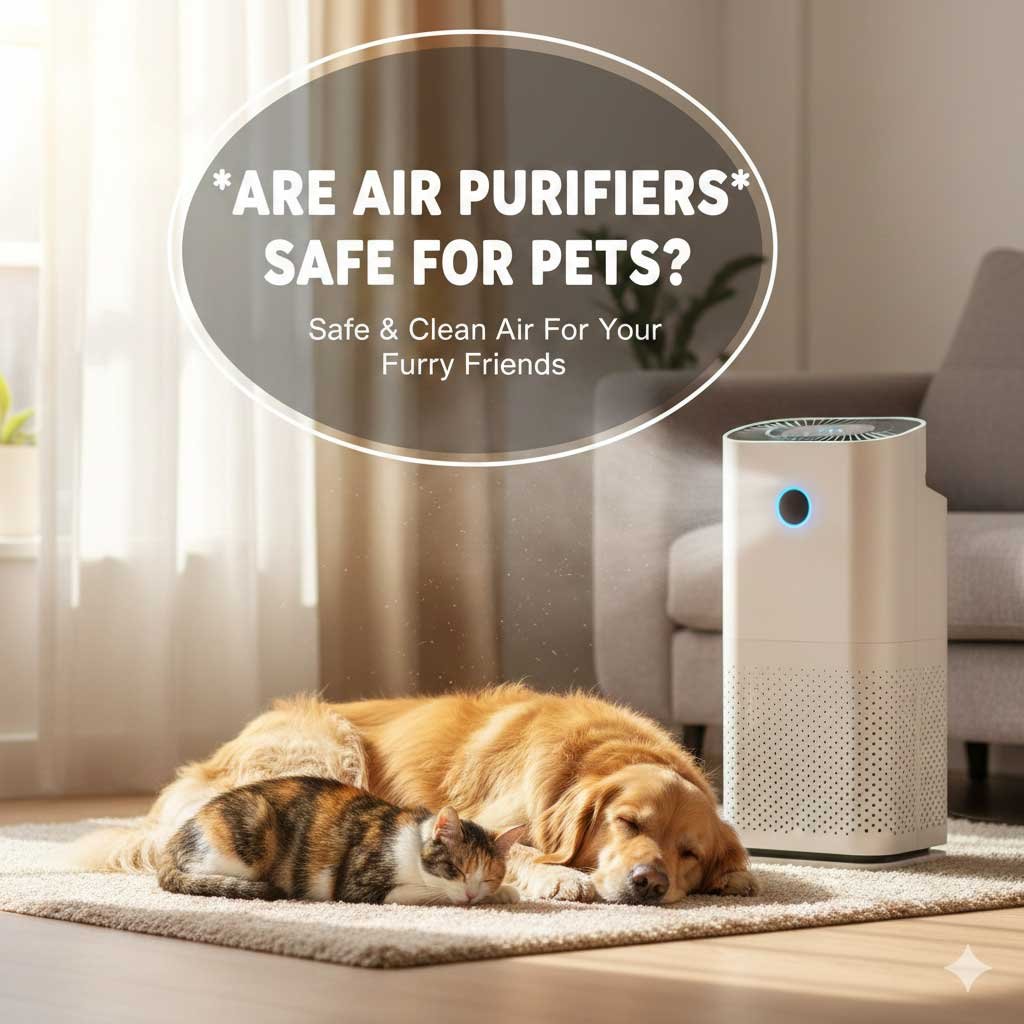
Table of Contents
Why You Need an Air Purifier for Your Pets
You might think air purifiers are just for humans with hay fever. But your pets breathe the same air you do. They are often closer to the floor where dust and dander settle.
1. Fighting the Dander Battle
Pets produce dander. These are tiny scales of skin that float through the air. These particles are microscopic. They can trigger asthma or itchy skin in both you and your pets. A good filter traps these before they land on your furniture.
2. Eliminating Stubborn Odors
Let’s be honest: even the cutest pets can get smelly. Whether it’s a litter box or a dog that just came in from the rain, odors are made of Volatile Organic Compounds (VOCs) and gases. Air purifiers with carbon filters absorb these smells naturally.
3. Protecting Sensitive Lungs
Many pets have very sensitive respiratory systems. This is especially true for birds and “flat-faced” dog breeds like Pugs or Bulldogs. Smoke, pollen, and even fumes from your cleaning products can make it hard for them to breathe.
The Safe vs. Dangerous: What to Look For
When you shop for a device, you will see many technical terms. For the safety of your pet, you need to know which ones are “mechanical” and which ones are “chemical.”
Recommended: Mechanical Filtration
Mechanical filters are 100% safe. They don’t release anything into the air. They simply pull air through a physical mesh to trap dirt.
- True HEPA Filters: These are the gold standard. They capture 99.97% of particles. This includes dander, mold, and dust.
- Activated Carbon Filters: These use treated charcoal. They “soak up” smells and toxic gases like a sponge.
- Pre-filters: These catch the big stuff like actual clumps of fur. This helps your expensive HEPA filter last longer.
Dangerous: Ozone and Ionizers
This is where you need to be careful. Some air purifiers use “Ionization” or “Ozone Generation” to clean the air.
- Ozone Generators: These are dangerous for pets. Ozone is a lung irritant. It can cause permanent lung damage in birds. It also causes respiratory distress in cats and dogs.
- Ionizers: These release charged ions into the air. While less intense than ozone generators, many produce ozone as a byproduct. It is best to avoid these. If you have one, ensure the “Ion” function can be turned off. Many pet owners are confused about the difference between these technologies. If you want a clear breakdown of how they compare in terms of safety and effectiveness, this guide explains air ionizer vs air purifier in detail.
Comparison Table: Which Technology is Pet-Safe?
| Feature | Is it Safe for Pets? | Why or Why Not? |
| True HEPA Filter | Yes (Best) | Physical mesh; no chemicals or gases released. |
| Activated Carbon | Yes | Naturally absorbs odors and VOCs safely. |
| Pre-Filter | Yes | Best for catching floating fur and hair. |
| UV-C Light | Generally Yes | Kills germs inside the machine; safe if shielded. |
| Ionizer | Caution | Can produce small amounts of irritating ozone. |
| Ozone Generator | No (Toxic) | Can cause lung damage and respiratory failure. |
How to Choose the Right Model for Your Home (Safe for Pet)
You don’t just want a safe machine. You want an effective one. Use these three metrics to find the perfect match for your space:
- CADR (Clean Air Delivery Rate): Look for a CADR of 200 or higher if you have multiple pets. This tells you how fast the machine cleans the air.
- ACH (Air Changes per Hour): Aim for at least 4 to 5 changes per hour. This means the machine cleans all the air in your room every 12 to 15 minutes.
- Noise Level: Some pets are easily spooked by loud noises. Look for a “Sleep Mode” or a decibel rating under 50 dB for a peaceful environment.
Pro-Tips for Using Your Air Purifier with Pets
Buying the machine is only the first step. To keep your pet safe and the air fresh, follow these simple maintenance tips:
- Secure the Cords: Kittens and puppies love to chew. Use cord protectors or hide the wires behind furniture to prevent electric shocks.
- Check the Placement: Place the unit on a flat, stable surface. If you have a large dog that likes to “zoom,” put the purifier in a corner where it won’t be knocked over.
- Vacuum the Pre-filter: If your pet sheds a lot, your pre-filter will clog quickly. Vacuum it once a week to keep the airflow strong.
- Skip the Scented Pads: Some purifiers allow you to add essential oil pads. Be careful. Oils like tea tree, eucalyptus, and peppermint are toxic to cats and dogs when inhaled.
FAQ
Yes. By removing triggers like dust mites, pollen, and dander, an air purifier can significantly reduce the frequency of asthma attacks in pets. Always use a True HEPA filter for this purpose.
Absolutely. In fact, most experts recommend it. Modern air purifiers are designed for continuous use and are very energy-efficient. Just make sure the power cord is pet-proofed.
Birds have incredibly efficient but delicate respiratory systems. They can die from even small amounts of ozone or fumes that wouldn’t affect a human. If you have birds, stick strictly to mechanical HEPA filtration.
Yes, but you need a model with a thick Activated Carbon filter. The carbon is what actually “traps” the odor molecules, whereas a HEPA filter only traps the physical hair and dander.
In a home with pets, you should check your filters more often. While many brands say 6 to 12 months, you might need to change yours every 4 to 6 months due to the extra hair and dander load.
Bottom Line
Finding the right balance between a clean home and a happy pet doesn’t have to be stressful. While you might worry about new gadgets, the reality is that high-quality units are a blessing for animal health. So, are air purifiers safe for pets? As long as you choose a True HEPA model and avoid ozone-producing features, they are a fantastic investment.


Leave a Reply