
Is your home air feeling a bit heavy lately? You might be looking for a way to breathe easier. When you start searching for solutions, you will likely hit a common debate: air ionizer vs air purifier. It sounds like they do the same thing, but they are actually very different.
Choosing the wrong one could mean you keep sneezing. Or worse, you might introduce new irritants into your living room. This guide will walk you through everything you need to know. We will look at how they work, what they cost, and which one actually cleans your air.
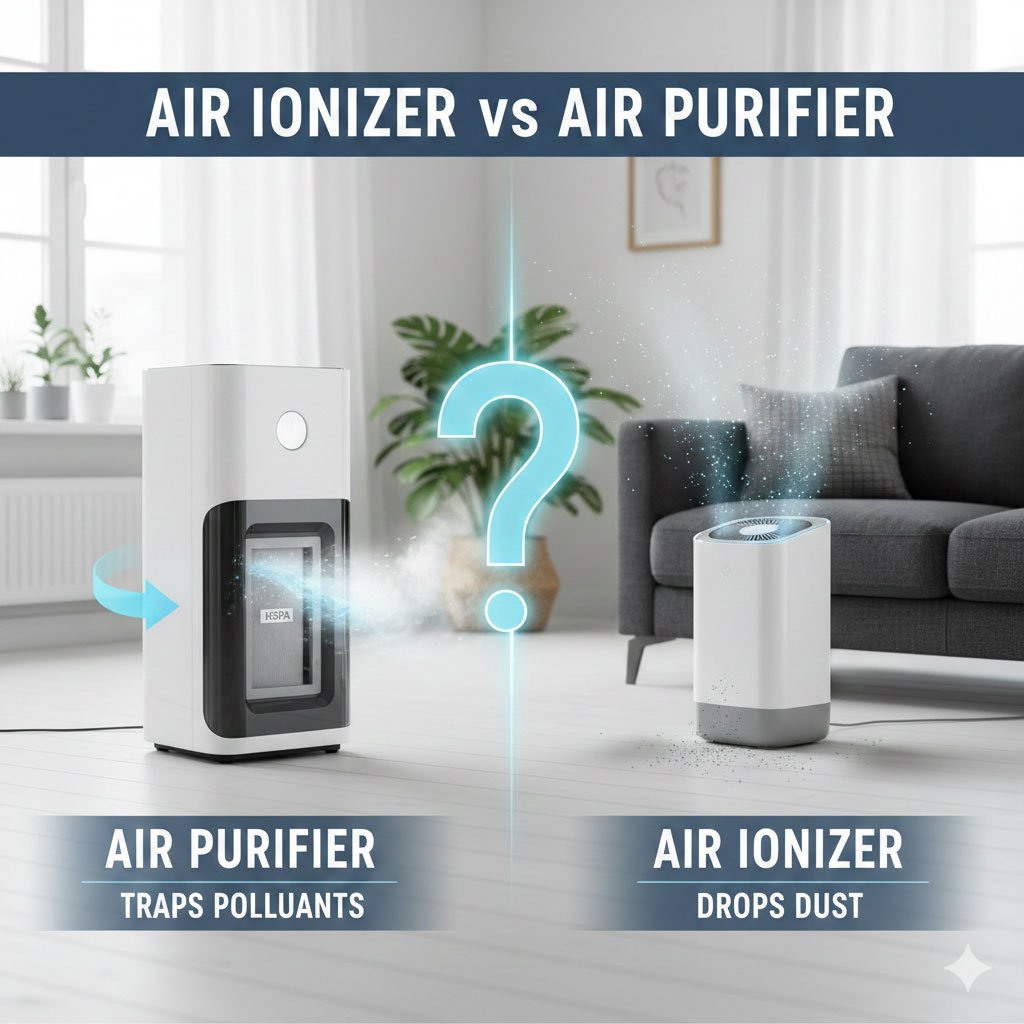
Table of Contents
How Does an Air Purifier Work?
An air purifier is like a high-tech vacuum for your air. It uses a fan to pull air from the room into the machine. Inside, the air passes through various filters. The most common and effective is the HEPA filter (High-Efficiency Particulate Air).
These filters are made of dense fibers. They physically trap tiny particles like dust mites, pollen, and pet dander. Once the air is “scrubbed” clean, the fan pushes it back into your room.
Key Features of Air Purifiers:
- Physical Removal: They take the dirt out of the room entirely.
- HEPA Technology: Rated to trap 99.97% of particles as small as 0.3 microns.
- Activated Carbon: Many models include a carbon stage to soak up odors and smoke.
How Does an Air Ionizer Work?
An air ionizer takes a completely different approach. It doesn’t use a fan or a traditional filter to catch dust. Instead, it sends out a stream of negatively charged ions into the air.
These ions act like magnets. They attach themselves to airborne particles like dust or smoke. This makes the particles heavy. Since they are now too heavy to float, they fall out of the air. They land on your floor, your walls, or your furniture.
Key Features of Air Ionizers:
- Particle Clumping: They make dust stick together so it drops.
- No Filters: Most ionizers don’t require you to buy replacement filters.
- Silent Operation: Since many lack fans, they are often whisper-quiet.
Air Ionizer vs Air Purifier Pros and Cons
When you are deciding which device to bring into your home, it helps to see the trade-offs clearly. Looking at the air ionizer vs air purifier pros and cons side-by-side allows you to choose based on your specific health needs and budget.
Air Purifier: The Reliable Filter
Pros:
- True Pollutant Removal: Because it uses a HEPA filter, it actually removes particles from the room. Once they are in the filter, they are gone for good.
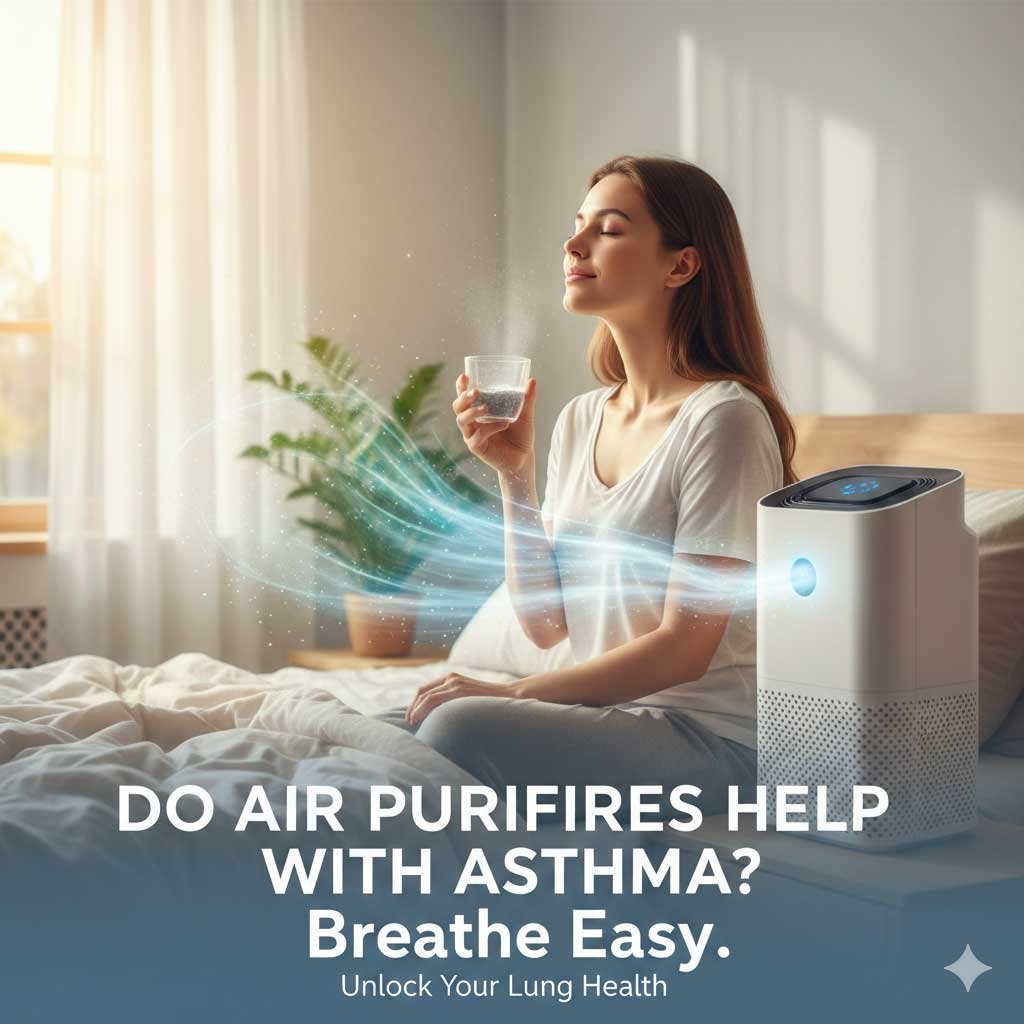
- Safe for Everyone: High-quality purifiers do not produce ozone, making them safe for infants, seniors, and pets. This makes them an excellent choice for people who struggle with seasonal reactions or dust sensitivity, as proper filtration can significantly reduce airborne triggers.
- Odor Control: Models with activated carbon are incredible at soaking up kitchen smells and smoke.
Cons:
- Recurring Costs: You will have to buy replacement filters once or twice a year.
- Noise: The fan makes a humming sound that might bother very light sleepers.
Air Ionizer: The Silent Charger
Pros:
- Completely Silent: Since most don’t have fans, they are perfect for a quiet office or nursery.
- Zero Filter Costs: You never have to spend money on expensive replacement parts.
- Tackles Fine Particles: They are very good at making microscopic smoke particles clump together.
Cons:
- Ozone Concerns: Some models create ozone, which can cause respiratory issues.
- High Maintenance Cleaning: You will have to dust your walls and vacuum your floors more often because the dirt lands there instead of in a machine.
Pros and Cons at a Glance
| Device Type | Biggest Pro | Biggest Con | Best For |
| Air Purifier | Physically removes allergens | Ongoing filter costs | Allergy and Asthma relief |
| Air Ionizer | No maintenance costs | Doesn’t remove dust from room | Budget-conscious buyers |
Air Ionizer vs Air Purifier: The Major Differences
| Feature | Air Purifier (HEPA) | Air Ionizer |
| Method | Traps particles in a physical filter. | Makes particles heavy so they fall. |
| Maintenance | Requires regular filter changes. | Requires cleaning surfaces/plates. |
| Ozone Risk | Generally zero (if no UV/Ionizer). | Can produce ozone as a byproduct. |
| Allergy Relief | Excellent for asthma and allergies. | Moderate; dust stays in the room. |
| Noise Level | Low to medium (fan noise). | Very low to silent. |
| Best For | Removing allergens and smoke. | Reducing ultra-fine particles. |
The Hidden Danger: What About Ozone?
One of the biggest concerns in the air ionizer vs air purifier debate is ozone. Some ionizers create ozone as a side effect of the charging process.
Ozone is a gas that can be a major lung irritant. If you have asthma or sensitive lungs, breathing in ozone can cause coughing or chest pain. Most modern air purifiers are designed to be “Ozone Free,” making them a much safer choice for families and pets.
Which One Should You Choose?
Choose an Air Purifier if:
- You have allergies or asthma.
- You want to remove pet hair and large dust clumps.
- You have enough floor or table space to set up the device for the best possible circulation.
Choose an Air Ionizer if:
- You are on a very tight budget and can’t afford filters.
- You want a device that is 100% silent.
- You don’t mind extra dusting and vacuuming (since dust lands on the floor).
Maintenance and Long-Term Costs
You should think about the “hidden” costs of your choice.
Air purifiers usually have an upfront cost plus the price of filters. You might spend $40 to $100 a year on new HEPA filters. However, your air is truly cleaner because the gunk is in the trash, not on your rug.
Air ionizers have a low operating cost. You don’t buy filters. But, you will spend more time cleaning. Because the particles land on your furniture, you have to wipe them up. If you don’t, they can get kicked back into the air when you walk by.
FAQ
Yes. Many high-end air purifiers actually have a “built-in” ionizer. You get the benefit of particles clumping together, which makes it even easier for the HEPA filter to catch them.
No, but they are related. An ionizer’s goal is to charge particles. An ozone generator’s goal is to create ozone to kill odors. However, many ionizers produce small amounts of ozone accidentally.
A high-quality HEPA filter can trap some bacteria and viruses. However, they are most effective at capturing larger triggers like mold spores and pollen.
You should be careful. Birds and small mammals are very sensitive to the ozone that some ionizers produce. It is usually safer to stick with a standard HEPA air purifier for pet owners.
Most manufacturers recommend changing the filter every 6 to 12 months. This depends on how often you run the machine and how dusty your home is.
They can help with some smells by clumping the particles. However, an air purifier with an activated carbon filter is much better at neutralizing odors from pets, trash, or smoke.
Technically, yes. Because an ionizer makes dust fall to the floor and stick to walls, you might notice “black dust” or soot-like marks on your surfaces if you don’t clean them regularly.
Bottom Line
Deciding between an air ionizer vs air purifier depends on your health goals. Air purifiers provide a safer, more effective way to trap allergens and odors. While ionizers are cheaper and quieter, they often leave dust on your surfaces. For the cleanest air, a HEPA-based air purifier is almost always the winning choice for your home.


Leave a Reply